


Your breakouts may have cleared, but what about the marks they’ve left behind? Whether it’s lingering redness, dark spots or uneven skin texture, post-acne marks can be frustrating, particularly when they seem to stick around long after the original blemish has disappeared.
Two popular treatments for improving the appearance of post-acne skin are chemical peels and microneedling. Both can help address certain concerns, but they work in different ways and aren’t necessarily suitable for the same types of marks.
So, is a chemical peel or microneedling better for acne marks? The answer depends on what type of marks you have, your skin type and what you’re hoping to achieve.
Understanding the Different Types of Post-Acne Marks
Before deciding on a treatment, it’s important to understand that not all acne marks are the same. What might look like acne scarring could actually be leftover pigmentation or redness, and these concerns often require different approaches.
1. Dark Marks: Post-Inflammatory Hyperpigmentation (PIH)
If your breakouts leave behind brown, grey or darker patches, you may be experiencing post-inflammatory hyperpigmentation. This happens when inflammation triggers increased melanin production in the skin, leaving areas of discolouration after the blemish has healed. PIH can affect all skin tones but is particularly common in people with darker skin. These marks are usually flat rather than indented and may gradually fade over time, although some can persist for months or longer.
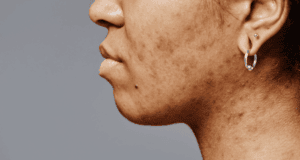
2. Red Marks: Post-Inflammatory Erythema (PIE)
If your acne leaves behind pink, red or purplish marks, this may be post-inflammatory erythema. Unlike pigmentation, which involves melanin, PIE is associated with changes in small blood vessels following inflammation. These marks are generally flat and can be more noticeable in lighter skin tones, although they can occur across different complexions. Red marks don’t necessarily respond to the same treatments as brown pigmentation, so identifying the difference is important.
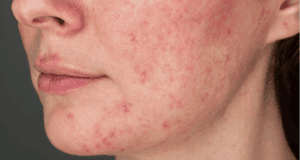
3. Indented Acne Scars
Some acne leaves behind changes in the skin’s structure rather than just its colour. Indented or atrophic scars develop when inflammation and tissue damage lead to a loss of collagen during healing. Common types include rolling, boxcar and ice-pick scars. Unlike flat pigmentation or redness, these scars create visible changes in skin texture and often require treatments that target the skin’s underlying structure.
This distinction matters because a treatment that improves pigmentation may not significantly improve an indented scar, and vice versa.
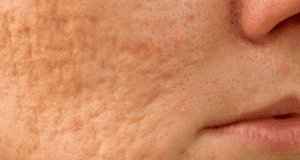
How Do Chemical Peels Work for Acne Marks?
Chemical peels use carefully selected exfoliating solutions to remove or encourage the shedding of layers of skin, depending on the type and strength of peel. They can help improve certain forms of uneven skin tone, surface texture and pigmentation by encouraging skin renewal. For people experiencing post-acne discolouration, superficial chemical peels may be an option worth discussing during a professional consultation.
What Can Chemical Peels Help With?
Depending on the formulation and your skin’s suitability, chemical peels may help improve:
- The appearance of certain dark post-acne marks.
- Uneven skin tone and superficial pigmentation.
- Rough or dull-looking skin.
- Some mild surface texture concerns.
Chemical peels can be particularly useful when the main concern is flat pigmentation rather than deeper scarring. However, they aren’t equally effective for every type of acne mark. For example, a superficial peel is unlikely to produce a substantial improvement in deep, indented acne scars.
Peels can also cause irritation or post-inflammatory pigmentation, particularly if the treatment is too aggressive for your skin. This is why the choice of peel, its strength and your individual skin characteristics should always be assessed by a qualified practitioner.
How Does Microneedling Work for Acne Marks?
Microneedling takes a different approach. Rather than primarily exfoliating the skin’s surface, microneedling uses very fine needles to create controlled micro-injuries in the skin. These stimulate the skin’s natural repair processes, including collagen remodelling over time. Because collagen plays an important role in the skin’s structure, microneedling is often considered for concerns involving uneven texture and certain types of acne scarring.
What Can Microneedling Help With?
Depending on your skin and the type of scarring, microneedling may help improve:
- The appearance of certain shallow, indented acne scars.
- Uneven skin texture.
- Some mild surface irregularities.
- Overall skin smoothness.
Microneedling is generally more relevant when acne has left behind structural changes rather than flat discolouration alone. However, results depend on the type, depth and severity of scarring. Deep ice-pick scars, for example, may require alternative or combined treatment approaches. Microneedling can also cause temporary redness, swelling and sensitivity, and there is a risk of infection or pigmentation changes if treatment is unsuitable or performed incorrectly.
You can learn more about how the treatment works in our guide to Microneedling at Simply Clinics.
Chemical Peels vs Microneedling: Which Is Better for Acne Marks?
The most appropriate treatment depends on the type of mark you’re trying to improve.
| Skin concern | Chemical peels | Microneedling |
|---|---|---|
| Dark post-acne marks (PIH) | May help improve superficial pigmentation. | Not usually the first choice for pigmentation alone. |
| Red post-acne marks (PIE) | Limited benefit for vascular redness. | Not usually the first choice for persistent vascular redness. |
| Shallow indented acne scars | Superficial peels have limited benefit. | May help improve certain atrophic scars. |
| Deep acne scars | May require specialist techniques beyond routine peels. | May offer limited improvement alone; specialist assessment is important. |
| Uneven skin texture | May improve superficial roughness. | May help improve texture associated with certain scars. |
Neither treatment is automatically better.
If your main concern is dark pigmentation, a suitable chemical peel may be worth considering. If you’re concerned about shallow, indented acne scars, microneedling may be more appropriate. For persistent red marks, neither treatment may be the ideal first choice, and a practitioner may recommend a different approach.
Are Chemical Peels or Microneedling Suitable for Darker Skin Tones?
Both treatments can be considered for a range of skin tones, but additional care is particularly important for skin that is more prone to post-inflammatory hyperpigmentation. Any treatment that causes inflammation or irritation has the potential to trigger further pigmentation changes. This means an overly aggressive chemical peel or inappropriate microneedling treatment could potentially make existing discolouration worse.
A practitioner should consider your skin tone, history of pigmentation, previous reactions to treatments and current skincare routine before recommending either option. For some patients, a more gradual approach using carefully selected skincare and appropriate superficial treatments may be preferable.
The goal should always be to improve your skin without creating unnecessary inflammation or increasing the risk of further pigmentation.
Can You Have Chemical Peels or Microneedling If You Still Have Acne?
This depends on the type and severity of your acne. Some chemical peels may be considered as part of a professionally supervised approach to mild acne, but not every peel is appropriate for active breakouts. Microneedling is generally avoided over active inflammatory acne lesions, particularly pustules, nodules or infected areas, because of the risk of irritation, infection and further skin damage.
If you’re experiencing ongoing or severe acne, it’s usually more appropriate to address the active condition before considering treatments for residual marks or scarring. Persistent, painful, nodular or scarring acne should be assessed by an appropriately qualified healthcare professional, as medical treatment may be needed to reduce the risk of further scarring.
How Many Treatments Will You Need?
Both chemical peels and microneedling are commonly performed as a course rather than a single treatment. However, the number of sessions required varies considerably depending on your skin concern, its severity and your individual response.
Chemical Peels: Superficial peels may be performed at intervals over several weeks, depending on the formulation and treatment plan. Improvements in superficial pigmentation can be gradual, and some marks may take months to fade.
Microneedling: Microneedling is often performed as a series of treatments spaced several weeks apart, allowing the skin time to recover and remodel collagen. Changes in skin texture may become more noticeable over the following weeks and months.
Neither treatment can guarantee complete removal of acne marks or scars. Deeper scars may only improve partially, and some patients may benefit from specialist treatments or a combination of approaches.
What Should You Avoid Before and After Treatment?
Appropriate preparation and aftercare are important for both treatments. Your practitioner should provide instructions tailored to your skin, the procedure and any products or medications you use.
General considerations include:
- Sun exposure: Avoid treatment on sunburnt or recently tanned skin, and follow your practitioner’s sun-exposure precautions.
- Active skincare: Certain exfoliating acids, retinoids and other potentially irritating products may need to be paused around treatment.
- Skin conditions: Active infections, open wounds, significant irritation or certain inflammatory skin conditions may make treatment unsuitable until resolved.
- Medication and medical history: Some medications, recent procedures and a history of abnormal scarring can affect treatment suitability.
- Aftercare: Follow the recommended cleansing, moisturising and sun-protection routine while your skin recovers.
Daily broad-spectrum SPF 30 or higher is particularly important when managing post-acne pigmentation, as ultraviolet exposure can contribute to persistent discolouration. Avoid picking, scratching or exfoliating healing skin, as this may increase the risk of irritation and further pigmentation.
Can You Combine Chemical Peels and Microneedling?
In some cases, a practitioner may recommend a treatment plan that includes both chemical peels and microneedling. For example, someone with a combination of post-acne pigmentation and shallow scarring may benefit from different treatments targeting each concern. However, combining treatments isn’t always necessary or appropriate. The timing, intensity and order of procedures need to be carefully considered to avoid excessive irritation or complications. Treatments should not be combined or performed too close together without professional assessment and a suitable recovery period.
How Do You Know Which Treatment Is Right for You?
If you’re unsure whether your acne has left behind pigmentation, redness or true scarring, a professional skin assessment is a useful starting point. At Simply Clinics, a consultation allows your practitioner to assess your skin concerns, discuss your treatment goals and explain which options may be appropriate.
Your practitioner will consider factors such as your skin tone, the type and severity of marks, any active acne, your medical history and the potential risks of treatment. In some cases, skincare alone may be the most appropriate first step. In others, a course of professional treatments or referral for specialist assessment may be recommended.
The important thing is choosing a treatment based on what your skin actually needs, rather than assuming that every post-acne mark requires the same solution.
Take the Next Step Towards Healthier-Looking Skin
Chemical peels and microneedling can both play a role in improving the appearance of post-acne skin, but they work in different ways. While chemical peels may be helpful for certain types of pigmentation and superficial unevenness, microneedling is often more relevant for shallow, indented acne scars and textural concerns.
The best treatment for your acne marks depends on identifying what type of marks you have in the first place.
Whether you’re dealing with lingering pigmentation, uneven texture or acne scarring, a personalised assessment can help you understand your options and set realistic expectations.
Not sure whether a chemical peel or microneedling is right for your skin?
Book a consultation at Simply Clinics to discuss your post-acne concerns and explore a treatment plan tailored to your individual needs.
Find Your Nearest Simply Clinics Location
Back


