


Thinking about booking your first aesthetic treatment but not quite sure where to start?
Whether you’re considering improving your skin quality, addressing fine lines or exploring a treatment you’ve seen online, taking that first step can feel a little overwhelming. With so many treatments, technologies and skincare options available, it’s not always easy to know what’s right for you. A good aesthetic consultation isn’t about convincing you to have a treatment. It’s about helping you understand your options, ask questions and make an informed decision about your skin and appearance.
If you’re preparing for your first appointment, here are some of the most important questions worth asking.
What Happens at Your First Aesthetic Consultation?
An aesthetic consultation is an opportunity to discuss your concerns, goals and expectations with an appropriately qualified practitioner before deciding whether to proceed with treatment.
Rather than focusing immediately on a particular procedure, your practitioner should take time to understand what you’d like to achieve and assess whether treatment is appropriate for you.
Depending on the treatment you’re considering, your consultation may include:
- A discussion about your skin concerns, aesthetic goals and expectations.
- A review of your relevant medical history, medications, allergies and previous treatments.
- An assessment of your skin, facial anatomy or treatment area.
- An explanation of suitable treatment options, including their benefits, limitations and risks.
- A discussion about expected results, recovery time, costs and potential maintenance.
- An opportunity to ask questions and consider your options before making a decision.
Not every consultation will follow exactly the same process, but you should leave feeling informed rather than pressured.
1. Is This Treatment Actually Right for Me?
This is one of the most important questions you can ask. Just because a treatment is popular, or has worked well for someone you know, doesn’t necessarily mean it’s the right option for your skin, anatomy or individual concerns.
For example, someone looking to improve skin hydration may benefit from a different approach than someone concerned about pigmentation, acne scarring or facial volume loss. Your practitioner should explain why they’re recommending a particular treatment and how it relates to your goals. It’s also worth asking whether there are alternative approaches, including skincare, different treatments or simply choosing not to have a procedure.
Remember, a good consultation should help you understand what you need, not just what treatments are available.
2. What Qualifications and Experience Does My Practitioner Have?
Knowing who will be carrying out your treatment is essential. Different aesthetic procedures require different levels of training, clinical knowledge and experience, particularly when they involve injections, medical devices or more invasive techniques.
Don’t be afraid to ask:
- What professional qualifications and training do you have?
- How much experience do you have performing this treatment?
- Are you registered with a relevant professional regulator, where applicable?
- Who will perform my treatment, and will it be the same practitioner I see for my consultation?
For treatments involving prescription-only medicines, an appropriate medical assessment and prescribing process are also important. A reputable practitioner should be comfortable discussing their qualifications and explaining the standards they follow.
3. What Results Can I Realistically Expect?
It’s natural to arrive at your consultation with an idea of what you’d like to achieve. Perhaps you’ve seen a before-and-after photograph online, or you’ve heard someone describe their experience with a particular treatment. However, aesthetic results vary from person to person. Your skin condition, age, anatomy, lifestyle, medical history and individual response can all influence the outcome.
Ask your practitioner what changes may realistically be achievable for you, rather than focusing solely on someone else’s results. You might also want to ask how noticeable the changes are likely to be, when you could expect to see them and whether multiple sessions may be required.
No aesthetic treatment can guarantee a particular result, and your practitioner should be transparent about what can and cannot be achieved.
4. What Are the Risks and Possible Side Effects?
Every aesthetic treatment carries some level of risk, even when it’s described as minimally invasive or requiring little downtime. Depending on the procedure, potential side effects may include temporary redness, swelling, bruising, discomfort or skin sensitivity. Some treatments also carry less common but more serious risks, such as infection, pigmentation changes, scarring or vascular complications. Your practitioner should explain the risks relevant to your proposed treatment, including how complications are recognised and managed.
It’s worth asking what symptoms are expected during recovery, which symptoms might indicate a complication and who you should contact if you experience a problem. You should also understand whether any aspect of your medical history could increase the risks. An informed decision means understanding both the potential benefits and the possible downsides.
5. How Much Downtime Will I Need?
One of the most common misconceptions about aesthetic treatments is that they’re all quick procedures with little or no recovery time. In reality, downtime varies considerably. Some treatments may cause only temporary redness, while others can involve swelling, bruising, peeling or a longer healing period. If you have a wedding, holiday, important meeting or another event coming up, it’s particularly important to discuss your timing.
Ask how long your skin may take to recover, whether you need to avoid exercise or certain skincare products, and whether there are any restrictions around sun exposure. Your practitioner should also explain when you can expect to see the full effects of treatment, as these may develop gradually rather than immediately. Planning ahead can help you avoid unnecessary stress and give your skin appropriate time to recover.
6. How Many Treatments Will I Need, and How Long Will Results Last?
Not every aesthetic treatment delivers its intended outcome in a single appointment. Some procedures, such as certain skin treatments and laser hair removal, are commonly performed as a course. Others may require maintenance appointments to sustain the results. Ask whether your recommended treatment involves one session or several, how frequently appointments are usually spaced and whether ongoing maintenance is likely.
It’s also important to understand that results can change over time. Factors such as ageing, sun exposure, hormonal changes and individual skin characteristics may influence how long improvements remain visible. Knowing the likely treatment journey from the beginning can help you plan both your time and budget.
7. What Will the Full Treatment Cost?
Aesthetic treatments are an investment, so understanding the complete cost before proceeding is important. The initial price you see advertised may not always reflect the full cost of achieving your desired outcome. For example, a treatment might require multiple sessions, follow-up appointments or ongoing maintenance.
Before committing, ask for a clear breakdown of the proposed treatment plan, including the cost of each session, any additional charges and whether follow-up appointments are included. You should also understand the clinic’s cancellation, refund and rescheduling policies. A transparent consultation should give you the information you need to make a decision without feeling rushed into purchasing a package.
8. What Happens If I’m Not Happy with My Results?
Although aesthetic treatments aim to achieve a positive outcome, individual responses can vary and results aren’t always exactly as expected. It’s sensible to ask what happens if you have concerns following your appointment. Your practitioner should explain the clinic’s follow-up process, how results are reviewed and what options may be available if an issue arises. It’s also important to distinguish between dissatisfaction with an aesthetic outcome and a medical complication, as these may require different responses.
Ask who you can contact after treatment, how urgent concerns are handled and whether additional appointments might involve further costs. Understanding the aftercare process before treatment can provide reassurance and help you know what to do if you need support.
9. Are There Any Reasons I Shouldn’t Have This Treatment?
Not every treatment is suitable for every patient, and certain medical conditions, medications or lifestyle factors may affect your eligibility. For example, some treatments may need to be postponed or avoided during pregnancy or breastfeeding, while certain medications or skin conditions can increase the risk of complications.
Recent sun exposure, active infections, previous procedures and a history of unusual scarring may also be relevant, depending on the treatment. This is why it’s important to provide accurate information about your medical history during your consultation.
Your practitioner should explain any contraindications relevant to your circumstances and whether an alternative approach or medical referral would be more appropriate. Sometimes, the safest and most appropriate recommendation is not to proceed with treatment.
10. Do I Need to Make a Decision Today?
Absolutely not. You should never feel pressured to commit to an aesthetic treatment during your first consultation. It’s perfectly reasonable to take time to consider the information you’ve been given, compare your options or seek a second opinion. For certain procedures, particularly cosmetic injectables, an appropriate cooling-off period is an important part of good practice.
Your practitioner should respect your decision to wait, ask additional questions or choose not to proceed. A consultation should give you the confidence to make your own decision, at your own pace.
What Are the Red Flags to Look Out for at an Aesthetic Consultation?
While most patients hope to leave their consultation feeling excited about their options, it’s equally important to recognise when something doesn’t feel right.
Some warning signs to be aware of include:
- Feeling pressured to book immediately: You should have adequate time to consider your options.
- Promises of guaranteed results: No practitioner can guarantee an exact aesthetic outcome.
- Limited discussion of risks: Potential side effects and complications should be explained clearly.
- Unclear qualifications: You should know who will perform your treatment and what training they have.
- Inadequate medical screening: Relevant medical history, medications and contraindications should be considered.
- Unrealistic recommendations: Treatment plans should be based on your individual needs rather than unnecessary procedures or upselling.
If you feel uncomfortable or don’t understand the information provided, it’s always reasonable to ask more questions or seek another professional opinion.
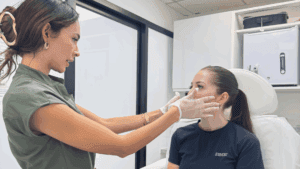
Here is an example of a consultation with Dr Jessica at Simply Clincis:https://www.instagram.com/reel/DfRoUrGD4Sp/
How Should You Prepare for Your First Aesthetic Consultation?
Before attending, think about your main concerns and what you’d realistically like to improve. You may find it useful to make a note of any questions, previous treatments or skincare products you’re currently using. Be prepared to discuss your relevant medical history, medications, allergies and any previous reactions to aesthetic procedures. If you have photographs showing how a skin concern has changed over time, these may also be useful to discuss with your practitioner.
Most importantly, arrive with an open mind. You don’t need to know exactly which treatment you want before your consultation. In fact, exploring your concerns without deciding on a procedure in advance can often lead to a more personalised recommendation.
What Can a Skin Consultation at Simply Clinics Involve?
At Simply Clinics, consultations are designed to help patients explore their individual concerns and understand the treatment options available to them. For patients interested in improving their skin quality, a consultation may involve discussing concerns such as dryness, pigmentation, texture or signs of ageing.
Depending on the consultation type and clinic availability, advanced skin analysis may also be used to support the assessment and discussion of your skin. You can learn more about this approach in our article: Advanced Skin Analysis with Dr Jessica: Skin Consultation.
Whether you’re considering a facial, laser treatment, injectable procedure or a personalised skincare routine, your consultation is an opportunity to understand which options may be appropriate for your needs. Any recommendation should take account of your individual circumstances, the potential benefits and risks, and your personal preferences.
Your Consultation, Your Choice
Your first aesthetic consultation should be about more than choosing a treatment. It’s an opportunity to learn about your skin, understand your options and build confidence in the decisions you make about your appearance. Asking the right questions can help you understand what to expect, recognise potential risks and feel more comfortable with your treatment journey. And remember, there’s no obligation to proceed.
Ready to explore your aesthetic options?
Book a consultation at Simply Clinics to discuss your concerns, ask questions and receive professional guidance on treatments that may be suitable for you.
Find Your Nearest Simply Clinics Location
Back


